Tuesday, October 2, 2012

The Social Network

This is based on a talk given to the first SCEEP reunion.

In the College of Engineering we are unashamed seekers after excellence.  As students you are all here because you are, or will be, excellent.

To be an engineer in the 21st century you must start with a foundation of technical excellence.  But that is not enough: you must develop that technical excellence plus the abilities that will let you use that excellence to make an impact.  These other abilities include creativity and innovation, an entrepreneurial mindset, intercultural intelligence, a collaborative spirit, social and environmental responsibility, and effective communication.  Developing these broader abilities is important.

Notice that I say developing.  Intelligence is not a fixed quantity.  Your capabilities are not static, and your potential is not limited.  Your intelligence, your capabilities, your potential for impact, can all grow.  And your job here at the UM is in fact to grow.

You do this through your classes, of course, but you also do this through the other experiences in which you engage at the UM.   When will do you research?  When will you work on an engineering project team?   When will you go abroad?  All of these experiences are educational and all are key to allowing you to grow into more than you currently are.

As SCEEP students you share a special bond – your experiences during the summer on our campus give you a special perspective on engineering in the CoE, and give you a special perspective on each other.   Because of SCEEP you come into the College with practice in working on teams – with an understanding of how to work across and to take advantage of differences between individuals.  You have begun to learn how to take advantage of the strengths of others, and how to contribute your own strengths to their efforts.

This general pattern – taking advantage of the capabilities of others, and contributing your capabilities in turn – is a key skill for success.  The social network that you build will contribute as much to your success as will the intellectual capabilities you develop.  So as you make yourself smarter and more informed, remember that success in engineering will come not just from technical excellence, but from that host of other competencies as well.  And remember that success will come from connecting with as large a network of others as you can.

You will never know when or how you might take advantage of your network.  This is an exercise in capacity building – you must meet others and learn about them without knowing how that connection might later matter to either of you.  Have faith: the social capital you build when you connect with another will pay off for both of you.

While traveling in China this summer a colleague and I met a UM student who was studying there; I she was there because she knew another of our colleagues who was advocating for her to take this chance to go to China.  If she had not had that connection, I would likely never have met her.  And because of that meeting she has a really cool job working with other students who are interested in going abroad.  That chance connection occurred because she was open to meeting new people and to approaching every new situation with an open mind and positive attitude, combined with hard work.    Her network of connections lead to positive results that none of us designed or intended; it was her social network that facilitated the good outcome.

This SCEEP reunion is itself the result of that same trip to China.  Chance connections and conversations there led directly to this event.

This event is a chance to renew your connection to your colleagues from SCEEP, and to meet students from other SCEEP cohorts.   But you need to build beyond these cohorts as well.  I encourage you to connect with as much of the UM community as you can, and to keep your education in mind as you do so.  Those chance connections into our community will pay off.

So let me ask again: When will do you research?  When will you work on an engineering project team?   When will you go abroad?  And who will you meet when you do these things, and what amazing outcomes will result from your doing so?

Sunday, July 22, 2012

An unlikely comparison


My parents were white and middle class.  My dad is a physician, and my mom was a classics major who taught school from time to time.  When I was young they talked with all of us about many careers, from anthropologist, to army officer, to curator, to doctor, to engineer, to musician, to professor, to sociologist.  It was a large list.

Maya Beasley’s book, Opting Out: losing the potential of America’s black youth (University of Chicago Press, 2011) describes how the lack of social and cultural capital in African-American families with students in highly selective institutions leads these students towards limited career choices.   Beasley writes that “responses from the students who participated in this study suggest that differences in social capital enable white parents to offer career advice and other support that is more insightful and more effective than the support provided by black parents.”  This difference is an effect of the different educational and career histories of white and African-American families coming out of the civil-rights movement of the 1960’s.

One difference that Dr. Beasley notes between the white and African-American students who she studied regards the sense of financial obligation that many black students feel, and that many white students do not.  Based on interviews with a number of students at highly selective colleges similar to the University of Michigan, she notes that African-American students often shape their career aspirations around a need to provide financially not only for themselves, but also for their parents, their grandparents, and even for their brothers and sisters.  The black and white families were equally involved in raising their children and equally stable but the African-American families, while middle class, did have lower median income than the white families, and had less chance to build wealth for the long-term.  This led the African-American students to design their career aspirations around their perception of the financial return of the occupation. In one example Beasley describes a student named Jason whose middle class family could not invest adequately for retirement.  Not only could they not transfer wealth to him to launch his future, but Jason felt an obligation to support his parents in their future retirement.  “There was no safety net for Jason; rather, he was to provide the safety net for the rest of his family,” Beasley writes.

This passage struck me because I work frequently with Chinese students.  When I first started doing so, I was struck, and indeed puzzled (from my own cultural perspective) by the narrow way that Chinese students selected their major.  Many of these students seemed to me to be focused on financial success rather than on how they could best make the world better, or where they could develop their own interests; they were focused on a narrow set of majors that they considered popular and potentially lucrative.  Over time I came to understand some of the realities that gave them this view: they have grown up in a tight job market and volatile economy; they are only children, born under China’s one-child policy; they are obliged under Confucian ideals to respect their family and build their primary loyalty around it.  And they are their parents’ retirement plan.  Because the relatively weak social safety net of the People’s Republic of China may prove inadequate to support the parents, these Chinese students will have to provide the safety net for the rest of their family.

This is an unexpected parallel: African-American students and Chinese students share a desire for economic stability for not only their own but also their parents’ and family's futures, and this impacts the way they think about career options.  White students in Beasley's study did not feel this economic instability; their families had accumulated significantly more wealth, their parents' futures were secure, and their own career aspirations ranged over a wider more diverse set of choices.  The Chinese students' families, like those of African-American students in Beasley’s study, could provide only limited perspective on career options, and this is strongly reflected in the students' choices.

The reality, discussed in Beasley’s study, is that the greater diversity of career choices apparent to white students may actual lead to greater economic stability than the more narrow choices of the African-American students in her study.  I suspect this would be true for our Chinese students as well.  The challenge is in finding a way to provide the social capital that could empower these students to think more broadly.

Acknowledgement: Drs. Amy Conger and Cinda-Sue Davis brought Maya Beasley's monograph to my attention last week.  I recommend it.

Saturday, July 14, 2012

Failure and Guanxi

THERE is a broadly perpetrated fiction in modern society. . . The fiction is that society consists of a set of independent individuals, each of whom acts to achieve goals that are independently arrived at…
Roger D. Goddard

Imagine you are in China; you do not speak the language; you do not know how to behave; you don’t know what those around you consider important. But you have important business to do. You will likely fail, not because you are incapable, but because you do not understand the system. Your failure will seem unfair.

The UM is a very selective place. All of our students were amazingly accomplished in high school. But some fail when they come here. A few fail by choice, but more fail because they do not know how to succeed, and do not learn the tools necessary for success in a demanding, complex, foreign environment. For many students the transition to college is not just a shift to a new academic environment, but is rather a move into a foreign culture. This transition is all too often disguised by the apparently familiar language (English) and activities (going to class), and the feeling of alienation and isolation goes unrecognized for the culture shock that it is.

Back to China: What do you do? Change China? Not likely. You will need to make connections with those who can help you. The social network you will build gives you what the Chinese call guanxi. You can think of it as capital on which to build success. Just as you need financial capital on which to build your business, so you need social capital on which to build success in any complex community setting. The importance of such social capital is demonstrated in the business setting by GM’s entry into China, as deftly described by Michael Dunne in his book “American Wheels, Chinese Roads.” GM’s many failures, leading to eventual success, can be traced to a failure to understand China and a failure to understand the importance of guanxi. But the principle applies more widely; there is a considerable sociological literature on social capital and its utility in creating success in a social setting, and a branch of this literature focuses on the role of social capital in college success.*

To succeed you need connections within the existing power structure and you need to understand the norms of the community – in the university setting you need connections with faculty and staff and other students, and you need to understand what is expected and what works. Students who understand the university as a community of people and understand this community's expectations – especially its implicit, hidden, unarticulated expectations – can much more easily do what is needed and can more easily find the support that we all need to be successful. Students with good guanxi are more robustly positioned to deal with roadblocks and setbacks. Those for whom the university is unfamiliar, like a foreign country, need to build a store of social connections and understand to help navigate the place or else they will fail.

Social Capital represents your ability to call on larger social networks to help you achieve your aims.These human connections can share understanding of community expectations, knowledge of success strategies, and transmit the social norms that lead to success – what are the most productive study strategies? where can you reach out for help? what are good co-curricular activities? ... and so on.

Your social connections can share their own connections within the broader organization, and they can even take actions to your benefit. I’ve met many students who succeed, and many who fail: those who fail often feel they have little control over their situation; they feel buffeted by outside influences and lack a sense of agency. Your social network, your guanxi, will provide information, influence, and control over your fate. Your social capital provides confidence.

*Roger Goddard, “Relational Networks, Social Trust, and Norms: A Social Capital Perspective on Students’ Chances of Academic Success,” Educational Evaluation and Policy Analysis, 25, pp 59-74 (2003) is one example of this literature.

Friday, May 11, 2012

The Day I Became a Study Abroad Parent


I put my son on a plane today.  He’s headed to Shanghai to study for 8 weeks at the University of Michigan – Shanghai Jiao Tong University Joint institute. I’ve written before in this blog about the benefit of international experiences, and this experience is going to make a huge difference to him. He’s stepping outside his comfort zone and will discover capabilities within himself that he does not know he has.  So why am I uneasy?

He’s talked about spending a summer in Asia since middle school. He’s now a young man just about to turn 22, and will realize this dream. He’s traveled overseas on shorter trips with me, and he’s even been to Shanghai before. He’s highly capable. I know that there will be unexpected challenges for him, and things will not go “according to plan.” But that’s the whole point: a huge part of the value for him will be learning to cope with the unexpected.  He’s well prepared for this.

But this blog is about me, and why I’m uneasy.  I really should not be: I’ve lived abroad several times, and know it’s doable, adventurous, and leads to growth; the folks in Ann Arbor who have arranged this program are amazing and I trust them completely; I’ve been to Shanghai many times, and I know most of the staff and faculty in China with whom he will interact.  With all this inside information and all these personal contacts, if I’m even a bit uneasy I can only imagine what other parents, lacking my contacts, might feel.

As we pulled away from the airport I picked up his smartphone, which is not going to China because the cost would be prohibitive.  It physically represents the loss of contact: I can’t call to see if he made the flight; I can’t email tomorrow to see if he arrived.  I probably won’t hear from him for several days.  The journey he’s launched is something like a test - the work will be his alone, and he will completely own the successes and failures of the adventure.  It’s that loss of control that causes my unease.  Seeing my son head to China is an act of faith: an act of faith in him.

It occurs to me that I too am going to learn something from his overseas experience.  I too am stepping outside my comfort zone and I too will discover something within myself.  But I don't yet know what.

Thursday, April 19, 2012

Working Around Black Boxes

Our engineering students all take a senior capstone course in which they design and sometimes even prototype a system.  This is a great way to apply their knowledge, and to synthesize what they have learned in the preceding years.  And of course it’s similar to what many engineers do in the real world.   But something strange happens in these classes: we assemble a team of 4 material scientists, or a team of 4 chemical engineers, or a team of 4 nuclear engineers, or a team of 4 biomedical engineers …, and tell these mono-disciplinary teams to do a design.  Where in the real world would that happen?  Such mono-disciplinary teams present an artificial constraint in knowledge and approach that would be foolish to replicate on most real engineering projects.

I heard from students recently about how they approach this challenge: they “black box it.”   Chemical engineers are required to specify the material from which they would build their reaction chambers: they select stainless steel.  Why?  They don’t really know, they are not sure it’s the best choice for their application, but stainless seems to be used a lot, so it’s a safe choice.  They simply eat the extra cost in their economic analysis (although I have to wonder if they include long-term maintenance costs in that analysis).  They don’t really have a solid approach to decide the issue of material for a reaction vessel.  They are busy with developing their chemical reaction and process control ideas, and don’t have the time or expertise to think about materials selection.  So they “black box it.”

Similarly, materials science students working on a project involving a coal power plant recognize that there is fluid flowing through those pipes, but they don’t know about that, so they “put it in a black box.”  Because they don’t work with a mechanical engineer they know little about the fluid flow issues that might constrain or inform their materials selection and design.  Temperature, pressure, velocity? Those are just givens, not subject to real consideration. They black box it.

Given a team of 4 mono-disciplinary engineering students, what do you suppose the business case for their designs look like?  It’s a recipe for failure.

We have always known that this mono-disciplinary team approach to design classes is artificial, but our goal has been to teach the design process, so a bit of simplification might be understandable.  But perhaps we have not realized that we are creating a careless attitude towards design.  The students I spoke to described how they would minimize portions of their design in order to work around the black box gaps in their knowledge.  Because they were strongly constrained in time to finish a project they had to hand wave over components of the system they were designing, and dismiss parts as unimportant, not because they were unimportant but because they were black boxes.  Imagine if they were to approach the design of a real mission critical system in such a fashion.

The solution is clear: student design teams need to be multidisciplinary.  But because we still assemble teams with insufficiently broad disciplinary expertise, what choice do the students have other than to design around the black boxes in their academic universe?

Sunday, March 11, 2012

Magnitude Nine

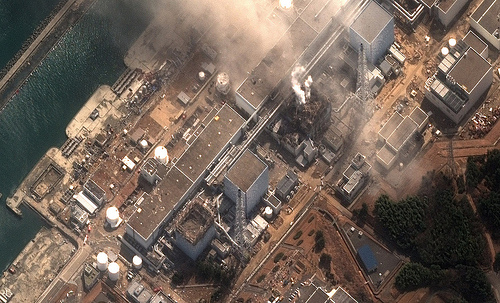
One year ago a magnitude 9.0 earthquake occurred off the east coast of the Japanese island of Honshu, displacing the 1300 km long island 2.4 meters east in the process.  The immediate damage to the infrastructure of Japan was intensified when the subsequent tsunami flooded the Japanese coast.  The earthquake and tsunami caused over 15,800 deaths, and left the nation severely challenged to provide even basic necessities to the Japanese people.  A year later the wreckage of towns near the coast remains.  As engineers we must consider the extent to which our systems compounded the disaster; the failure of power and transportation systems, for example, left the nation less able to respond in a time of dire need.  But most notable in this respect is the failure of the Fukushima Dai-ichi nuclear power station.

I have previously written about the core competencies that an engineer should have for the 21st century.  Within Michigan Engineering we are continuing to refine our understanding of these competencies, but among them is Social & Environmental Responsibility, defined as “an understanding of human, social and environmental impacts, and the ethical tools to make sustainable and responsible decisions.” The crisis created at Fukushima on March 11, 2011 makes the importance of this social and environmental thinking manifestly plain.

We expect it may take 40 years to fully clean up and dismantle the six nuclear reactors at the site. One hundred thousand people remain displaced from the towns closest to the plant, and some still uncertain area around the plant may remain off-limits for normal habitation for decades or more.  Produce from the area, whether contaminated or not, is treated with suspicion all over Japan and the livelihood of many is gone.  This is unacceptable.
Fukushima Dai-ichi (DigitalGlobe www.digitalglobe.com)

This engineering failure will have long-term social implications.  Since the disaster all but 2 of Japan’s 54 nuclear plants have been shutdown for “stress tests;” these plants represent 30% of Japan’s electrical generation capacity.  Without doubt some of these plants will operate again, but a county that had previously been convinced that nuclear power was vital for electric power production is discovering, in a sudden and brutal way, that they can in fact survive without it. Combined with renewed distrust for the utility companies and the government, this will lead to significant rethinking of priorities and strategies for energy generation in Japan.  Japanese society is learning that they can operate without their nuclear plants.   Long a staunch supporter of the Kyoto protocols on reducing carbon emission, Japan could increase reliance on fossil fuels; this could lead to increased tensions as more nations contend for access to dwindling sources of such fuel.  Or Japan may drive new ideas in energy conservation or in renewable energy; but Japan is land poor, and renewables require repurposing of large open spaces to energy production.  Will Japanese cities become even denser to make space for wind and solar energy production in the country?  Will Japan's already strained ability to produce food suffer?

Whatever the outcome, our many failures at Fukushima: our failure to make the engineered systems more robust; our failure to realistically assess the potential earthquake magnitude and tsunami height; our failure to provide a better system to control the process of decay heat production and removal in the plant; our failure to develop better emergency response; all these failures by engineers will have an unintended impact on the structure of Japanese society.

The disaster at Fukushima Dai-ichi reminds us, more than can any lecture or recap of a code of ethics, that as engineers we are responsible to society and to the environment.  Even the very wise cannot see all ends; we must remember that our actions may impact many lives – for good and for ill – in ways that we might not intend or foresee

Tuesday, February 14, 2012

Online?


Despite being a denizen of the digital world, or maybe because he knew all too well its isolating potential, Jobs was a strong believer in face-to-face meetings.”
Walter Isaacson, in Steve Jobs

Some of my colleagues tell me that my head is in the sand over online learning.  We should be teaching all our students through the internet, and reaching orders of magnitude more students than we currently do, they advise.

These colleagues point to the online tutorials like the Khan Academy and Stanford’s experiment in teaching 35,000 students in a computer science class, and extol the virtues of those modalities.  The best lecturers in the world should give the lectures in all our courses, while our students watch whenever and from wherever they are.

I look, and all I really see are video textbooks. These online lectures are sometimes fine ways of conveying information: interesting, engaging, and occasionally richly visual. But so is a good textbook. The lecture, as a pedagogical device, makes most sense when there is information to share that is difficult to share in a written form, such as when describing a process or a subtle idea requiring human body language or intonation, or when sharing information that is not easily found in written form, either because it is so fresh it has not been written in an accessible form, or when it is so scattered that the bringing together of the various strands is too complex for the novice scholar.  In these cases, the lecturer is a curator or editor of ideas.

Where such lectures can be replaced with videos, go ahead.  But we should critically examine first: could such lectures be better replaced with a written text?  Compared to reading, listening is a very slow process.  Indeed, when the UM Medical School started providing podcasts the medical students listened to them sped up by 3 times, in chipmunk mode, to hear the lecture at more efficient speed.

But the real problem with the online utopian vision of education is that it physically separates the students, from each other, and from the teacher.  While online advocates enthuse on the virtues of online discussion and online community, these fail to replace the face-to-face human process of learning.

Silicon Valley is a physical place, it is not a virtual place.  The Valley has two things: high tech companies, and venture capital firms.  They don’t physically separate or do their business with each other online.  The innovators in this ecosystem want to bump into each other in the coffee shops of Palo Alto.  The investors want to go down the street and talk face-to-face with those in whom they invest.  If the companies that are driving the internet -- Facebook, Google, YouTube, and others -- need face-to-face work, why should we expect that the even more social construct of learning would require any less?

Online learning makes sense only for the lowest levels of education – teaching facts to be used to pass a test.  To teach creative thinking, self-reliance, and values, requires human interaction, face-to-face.  It requires action and practice, and for young people it requires structure.   Those who look to online lectures as the future of education are burying their heads in the sand.   We should not be looking at how to enshrine the lecture as the video textbook – this is a harmless but non-adaptive strategy.  Put em online, I don’t care.  We should instead we working to develop education based on authentic creative effort, with students learning to work in teams and solve real problems in the face of insufficient information and critical choice.

"There is a temptation in our networked age to think that ideas can be developed by email and iChat.  That’s crazy.  Creativity comes from spontaneous meetings, from random discussions.  You run into someone, you ask what they’re doing, you say ‘Wow,’ and soon you’re cooking up all sorts of ideas."
Steve Jobs